
Let it never be said that Team Reptile didn’t try. Considering that Sega, in an act of near-criminal negligence, let the Jet Set Radio series wither on the vine for over a decade—while the original got a remaster in 2012, Jet Set Radio Future missed the backwards compatibility bus on the Xbox One and Series X/S—it’s easy to regard Bomb Rush Cyberfunk as a clear attempt to right a wrong. And it’s a noble one at that. It certainly doesn’t hide its inspirations. There’s so much of the old magic here, and it’s all executed rather well. But that makes it all the more frustrating that the game falls just short of perfection.
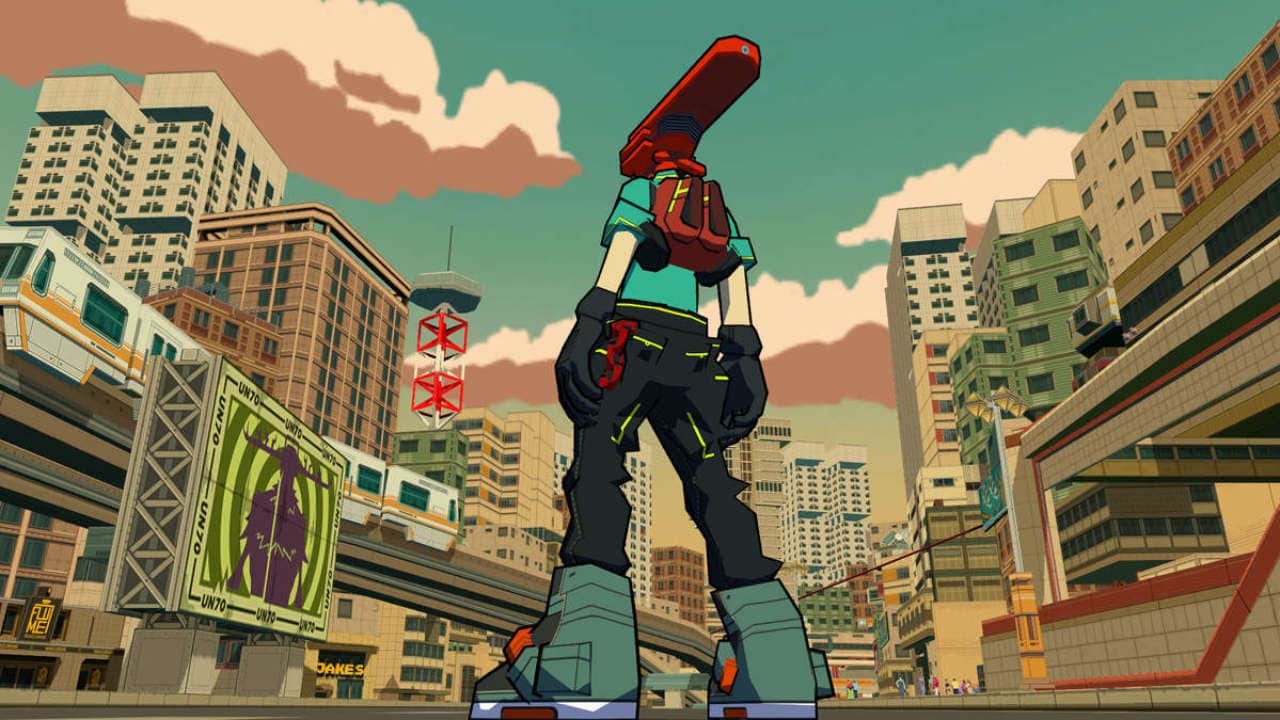
Right out of the gate, Bomb Rush Cyberfunk does an excellent job aping the blocky cel-shaded aesthetic of the original titles—a look that still feels unique and dazzling after all these years. The soundtrack, while not as expansive as the one for Jet Set Radio Future, is thrillingly packed with wall-to-wall bops. And, of course, there’s the graffiti art, as unique and cool as ever, and mechanically, the new way you execute specific pieces with the analog stick is downright elegant—one of the scant few places that the game actually improves on its forebears.
But it’s difficult to shake that something’s missing here. The Jet Set Radio titles were uniquely Japanese in their approach, with each and every one of their environments feeling and sounding like an ungovernable psychedelic urban-art rendition of Tokyo and its various districts. Bomb Rush Cyberfunk’s city, by contrast, feels like a nowheresville—a future vision that feels like it could never exist, because it feels too sparse and incoherent for anyone to ever call it home.
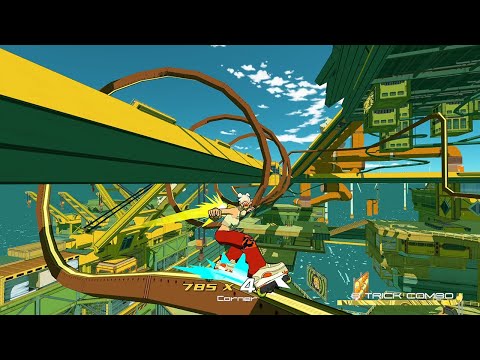
There was a certain rebellious appeal to skating around Tokyo’s power lines and railings in the early games—a sense that you weren’t supposed to be doing that. Bomb Rush Cyberfunk’s city has some fun obstacles to traverse, towers to climb, and rooftops to jump. In addition, the new skating/trick mechanics lend a Tony Hawk Pro Skater-like vibe to every stage, especially given that your hero crew doesn’t just use rocket-powered rollerblades to get around, but bicycles and skateboards. That said, every inch of the city feels like a skatepark—not austere in the least, but controlled and linear in ways that this particular concept probably shouldn’t be.
In terms of the characters and story, the right elements are in place, with the game’s ’80s-rap-battle vibes—a gang of street judges called The Oldheads are a memorable nod to Run-DMC—moshing up against the po-faced cyberpunk ACAB elements. And as the graffiti gangs trick and tag and scrap across the city, you’ll contend with a police force that’s humanity-free.
Great on paper, but in practice Bomb Rush Cyberfunk is tonally stranded. It’s not serious enough to make the grim police stuff stick, and not playful enough for the wild robot street-gang warfare to feel fun and loose. And it’s not self-aware and referential enough to lean into the winking campiness that made Jet Set Radio even more of a charmer than it already was.
The closest the game gets to forging its own identity are protracted sequences where our main character, Red, gets lost inside a surreal cybernetic dream world when connecting to his rivals’ subconsciousness. It’s there that he must traverse an obstacle course of purple skies, fish with grind rails for fins, and never-ending highways stretching throughout the mind. These stages are intriguing, but are, by design, extremely separate from the tone of the rest of the game.
In a bubble, Bomb Rush Cyberfunk is still a wonderfully odd anomaly in 2023’s gaming landscape, and above all else, it consistently feels exhilarating to play. For one, getting into a groove where you’re stringing rail grinds, risky jumps, mid-air tricks, and graffiti tags together, all while avoiding keen-to-kill SWAT teams is a very unique thrill.
But, even then, there’s this overwhelming sense that the tricks don’t really serve much purpose until the game tells you that points and graffiti tags matter, basically driving a wedge between the best thing about the game and the activities that actually progress the story. Bomb Rush Cyberfunk is resuscitating what made Jet Set Radio so great back in the day, and it’s far from being a disgrace to the name. But it’s off-kilter in every way that the original games felt cohesive.
This game was reviewed with code provided by Team Reptile.
Since 2001, we've brought you uncompromising, candid takes on the world of film, music, television, video games, theater, and more. Independently owned and operated publications like Slant have been hit hard in recent years, but we’re committed to keeping our content free and accessible—meaning no paywalls or fees.
If you like what we do, please consider subscribing to our Patreon or making a donation.
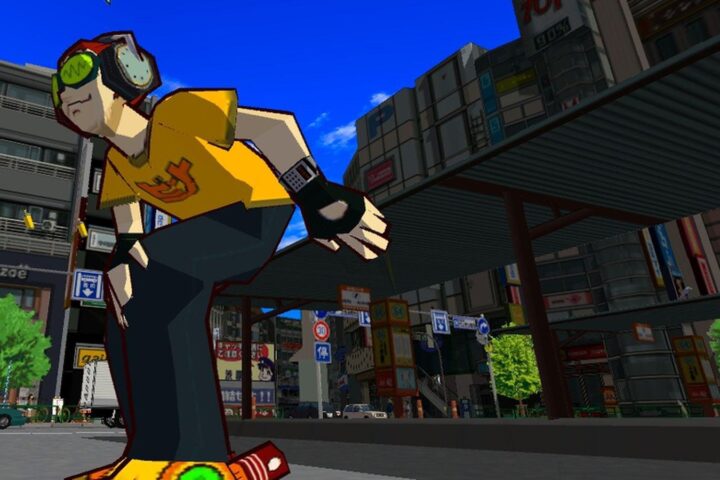


I think this review gets at the core of why I’ve been hesitant to commit to Team Reptile’s take on Sega’s seminal cult favorite. Jet Set Radio’s appeal was inextricably linked to its cultural commentary: rival gangs take to the streets against the deeply oppressive police, who are not above an exaggerated display of force by dispatching squadrons of goons, tanks, and helicopters against the disenfranchised youth. In defiance, the gangs air music from their pirate radio station and tag the city, all while evading the authorities. Punk is their sound, graffiti is their sign.
And I think it’s there that I get the sense that Team Reptile may have missed the mark somewhat: Bomb Rush Cyberfunk is not punk. In Jet Set Radio, everything they do, say, and wear is in defiance of the authority and the expected cultural norms. That defiance, their acts of rebellion, that is punk. The clothes they wear might seem silly, but they’re a meaningful commentary on urban styles that actually exist. The cities they roam may be an exaggeration, but they’re inspired by actual places; their defilement is a message. The city wasn’t meant to be their playground, but they’ll skate around it anyways because that’s what it means to defy something, to take something and bend it to their will.
By contrast, Bomb Rush Cyberfunk co-opts a very similar style and approach, but without its meaning it ceases to be punk. Both games sport an outlandishly garish style, but devoid of purpose, Bomb Rush Cyberfunk’s style comes across as whacky just for the sake of being whacky (to be honest, this was something I also had difficulty adjusting to with Team Reptile’s other game, Lethal League, whose characters seem overly focused on appearing absurdly whacky that none of them seemed appealing to learn). Even Cyberfunk’s cities are basically designed as glorified skate parks: rather than defying the city and bending it to their will, they’re cooperating with it. The gameplay might benefit as a result, but the theming is destroyed in the process.
That isn’t to say Bomb Rush Cyberfunk is without merit. Absolutely not. In today’s climate of “triple-a” game development that’s overly committed to monetization and “engagement” at the expense of its players, it’s rare to see a game so purely committed to its own definition of fun. And if that’s your only criteria for success, then Bomb Rush Cyberfunk is a clear winner.