It’d be easy to say that all that Cyberpunk 2077 needed was three extra years in the oven and it would have come out as good as it is in its current state. On arrival, the game was the thoughtless child of abominable crunch made oppressively worse by mismanagement and a toxic culture of hype from within CD Projekt RED and without. And it took the entire industry—from CDPR’s tired, infuriated workforce, to the more constructive corners of their existing fanbase—raging against all the problems of AAA hubris to bring the game to this moment.
In 2023, Cyberpunk 2077 has largely delivered on the experience promised nearly a decade ago by its makers, thanks to the double-barreled assault of the game’s 2.0 patch and, now, Cyberpunk 2077: Phantom Liberty. And in its complete form, Cyberpunk 2077 is, if not a different game, then certainly one operating with clarity of vision—whose intent and ultimate conclusions are easy to appreciate without its hideous flaws gumming up the works.
The 2.0 update is a huge part of it, and not just because the vast majority of Cyberpunk 2077’s infamous technical issues have been eradicated. That update completely overhauls the game’s stat/upgrade system, allowing players to truly build up their protagonist, V. Perks are no longer so heavily tied to clothes and incremental number-go-up improvements when leveling up. Now, they organically encourage players to discover their playstyle, and generously heap skill points on the player to build up their Night City legend fast and without making them invincible.
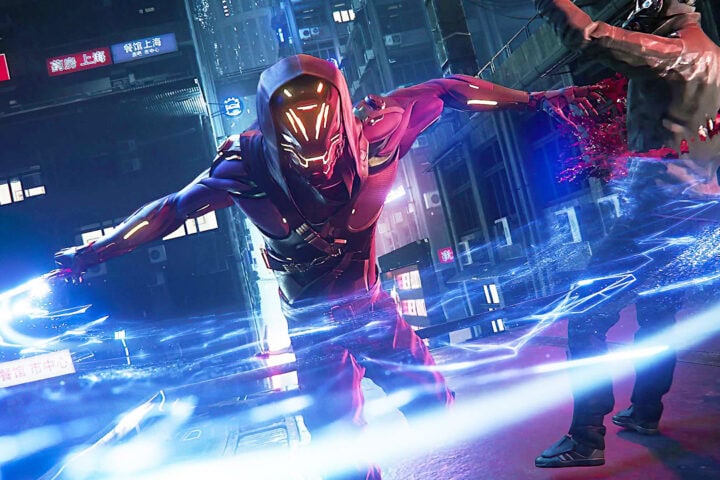
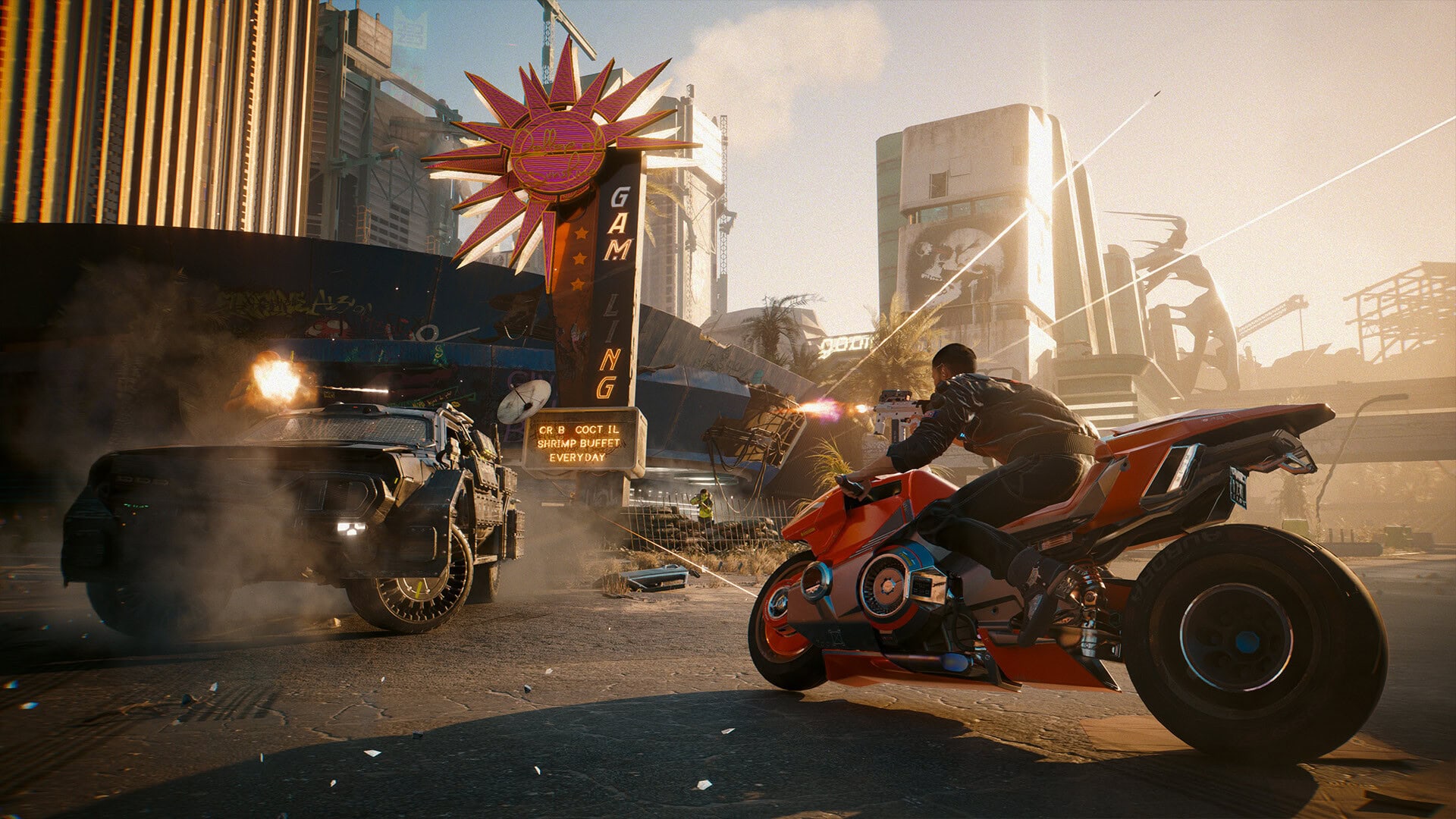
Vehicle combat boasts its own new (and aptly Mad Max-referencing) upgrades, allowing players to bash cars off the road, perform drive-bys, slit enemy throats with swords when riding bikes, and fire out of windows with ease. Because the original game funneled players so vehemently toward stealth and hacking, it was an immense pleasure for me to build a hard-drinking cyborg ninja biker chick who could zip around battlefields dodging bullets and slicing scumbags in half with a new melee weapon’s finishing moves. If the original game kept players on a short leash, that leash is off now, and running absolutely wild feels incredible.
With Cyberpunk 2077’s mechanical problems now out of its way, I found myself willing and able to truly look around at Night City, listen to its conversations uninterrupted, and take every opportunity to breathe. The base game is what it’s always been: Then and now, it wears its influences on its sleeve, and doesn’t exactly break new ground for the genre conceptually. But the execution is its ace, and without having to wrestle the game’s technical aspects into submission, or worry about subtle moments being interrupted by crashes or glitches.
Without that struggle taking up so much space headspace, Keanu Reeves’s Johnny Silverhand in particular felt like a much different presence this time around. Not in terms of being rewritten, but seeing Night City in its true splendor and squalor worked to make it feel that he and V were being brought closer together. The base story of Cyberpunk 2077 hasn’t changed since our initial review, but it’s now much easier to hear and understand the sense of betrayal in him over how far capitalism had been allowed to dissolve everything good in the world. He’s a true rock ‘n’ roll asshole who found purpose, and is disgusted that his sacrifice meant so little.
V is in perpetual danger of meeting the same fate, thanks to the experimental datashard in their head that could kill them at any time. They are able to find a gallows camaraderie with the world around them, choosing to burn out than fade away. It’s in those moments where Night City’s noise dies down and V is able to pick a character’s brain—often literally—or choose the road less traveled with their enemies that the game finds quite a bit more depth than it lets on.

Much of the power of Cyberpunk: Edgerunners, the Netflix anime that brought the game a second chance in the zeitgeist, was in how much it drilled down on a character who felt they had to dig their hole deeper to succeed. With a V much more of the player’s making, there’s a nice contrast with that show’s protagonist, David Martinez. Here, you play a character who can do so much more with their time, and succeed where other Night City hopefuls could not.
That all comes to bear in Phantom Liberty proper, an absolute barn-burner of a final flourish for Cyberpunk 2077’s last hurrah. The DLC takes place in the hyper-libertarian district of Dogtown just before V traipses off to the base game’s final missions. A government agent named Songbird offers V an alternative solution to the relic problem, in exchange for helping to rescue the president of the New United States, whose spacecraft crash-lands in Dogtown. With the help of sleeper government agent Solomon Reed (Idris Elba), V is suddenly a super spy.
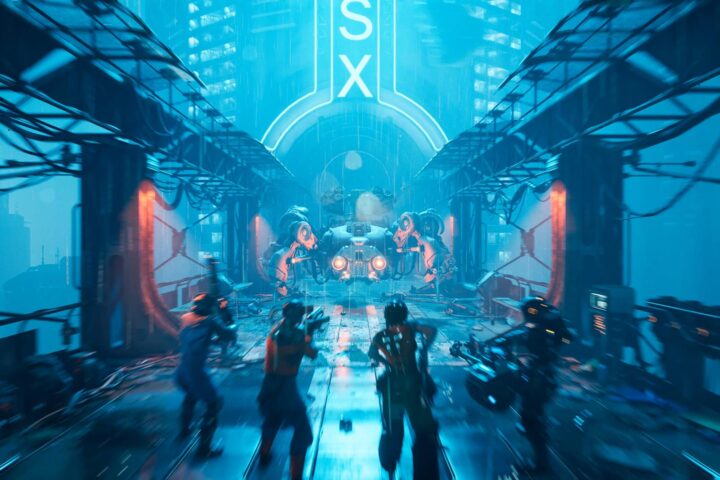
It starts with the president’s rescue from an absolute warzone, a two-hour sci-fi action sequence that could probably support a full game by itself, especially its Ghost in the Shell-inspired climax, with V and the president fighting a giant tank in a museum. As the DLC progresses, it’s not just a greatest-hits package of all that was good about Cyberpunk 2077 in the first place, but an escalation of ideas frequently missing from the main missions in the base game. There’s also a new menagerie of geared-up weirdos to encounter across Night City, from Haitian Netwatch agents snitching down their own communities from the inside, to a pair of French twins who wouldn’t be out of place in a Daniel Craig Bond film (and during a sequence that feels like CD Projekt RED giving Elba the Bond film that the internet’s been clamoring for years).
At the forefront of Phantom Liberty is the story and the character work, especially the way that it zeroes in on how all of the world’s institutions fail everyone but the few at the top, leaving even the cops and government agents killing to protect it lost in the lurch. Throughout, there are discussions of regrets, of souls dying before they can be sold to the devil, and some genuinely shocking betrayals and decisions to make as the campaign reaches its climax.
And it all leads to a new available ending for the entire game that’s both a more subtle, sad ending for V than some players may be willing to run with and a strong final statement on the game that was Cyberpunk 2077. It’s an ending with more depth than expected, about the nature of the power that this type of open world grants—both to V and the player controlling them—and the immense, soul-crushing work involved in wielding it responsibly. CD Projekt RED knows that better than any developer would now. Like all of Night City’s heroes, Cyberpunk 2077 had to be torn apart and rebuilt before it could become legendary.
This game was reviewed with code provided by Evolve PR.
Since 2001, we've brought you uncompromising, candid takes on the world of film, music, television, video games, theater, and more. Independently owned and operated publications like Slant have been hit hard in recent years, but we’re committed to keeping our content free and accessible—meaning no paywalls or fees.
If you like what we do, please consider subscribing to our Patreon or making a donation.