By its very nature as a minimalist experience, there’s very little for Strayed Lights to hide behind as a game. Aside from Austin Wintory’s evocative score, the debut title for Stratsbourg-based development studio Embers is about as stripped down as you can get without resorting to Thomas Was Alone levels of sentient geometric shapes.
As far as one can tell, the game tells the story of a bipedal creature held together by pure light. They’re ripped apart by an encroaching darkness, and the only thing that can fix them is to traipse through a portal and confront the various hideously mutated entities born of their wayward sparks. There’s no dialogue in the game, and no text outside of menus, just a few neon character models emoting their fluorescent asses off in a purgatorial world.
Strayed Lights asks a lot of the player, and while it gives quite a bit back in return, it leaves you with a sense that something is missing that might have turned a largely interesting experience into a compelling one. And that’s mostly a consequence of its one genuinely complex aspect: a combat system that suggests a wicked hybrid of a Souls game, Ikaruga, and Punch-Out.
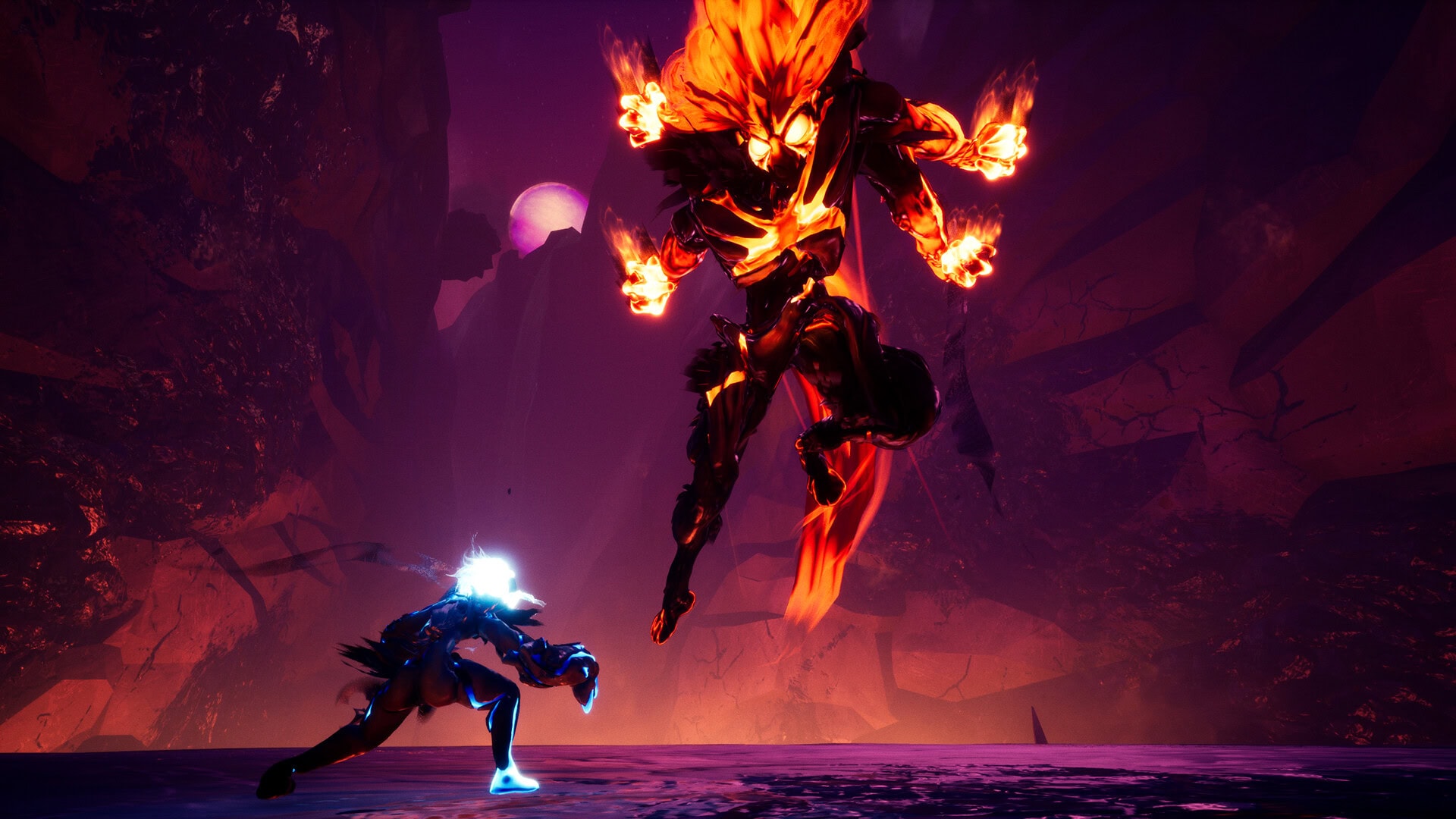
Our hero is able to parry attacks from the game’s nebulous beasts as they wander the landscape for their quarry, but regular attacks only do miniscule damage. A parry while matching the enemy’s color during the moment of attack will do a massive amount of damage. It sounds simple, but that’s where the Ikaruga comparison comes in. It doesn’t take long before the attacks come in swift patterns, requiring you to shift colors on the fly, and while blocking an attack with the opposite color does no damage, the consequence of missing a parry is severe.
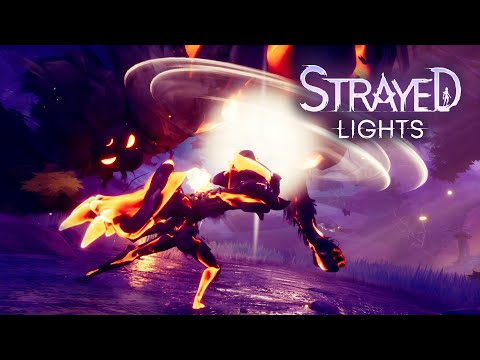
That’s not to say the game is impossible or unenjoyable. On the contrary, the parry system is a unique twist, and getting into a rhythm with your enemies makes even low-level fights absolutely thrilling. That feeling reaches its peak during the boss fights, where the light show created by dancing around with gargantuan beasts manipulating the stage in unique ways is dazzling. One particular boss, an angelic figure that’s able to shift in and out of dimensions from violet limbo to green pastures to transparent wireframes on the fly, is a technical marvel.
As for the game’s world, it’s big, open, and no less visually striking. Our hero evolves and changes shape over time, even morphing into abstract approximations of mythological heroes along the way. They also show forgiveness and mercy to their nameless prey. But eye candy and a vague gesture toward emotionality ends up being rather thin justification for the amount of work that the game expects from each and every battle across the campaign.
There were people who complained about thatgamecompany’s Journey for the opposite reasons. Strayed Lights feels like the other end of the challenge spectrum, a harsh taskmaster that shifts gears from the adrenal panic of its combat to the gentle warmth of its story far too quickly to make it effective. Something in the middle that beckons the player onward without grinding them into the dirt would be the ideal version of this approach to storytelling.
Still, Strayed Lights admirably tries its best to serve two masters, attempting to be a loving interpretive dance of a narrative held together with ruthless, tricky, defensive combat. The yin and yang of the game may not fit together perfectly, unbalanced as they are, but both sides are executed with enough forethought, joy, and panache to make the experience worthwhile.
This game was reviewed with code provided by HomeRun PR.
Since 2001, we've brought you uncompromising, candid takes on the world of film, music, television, video games, theater, and more. Independently owned and operated publications like Slant have been hit hard in recent years, but we’re committed to keeping our content free and accessible—meaning no paywalls or fees.
If you like what we do, please consider subscribing to our Patreon or making a donation.